


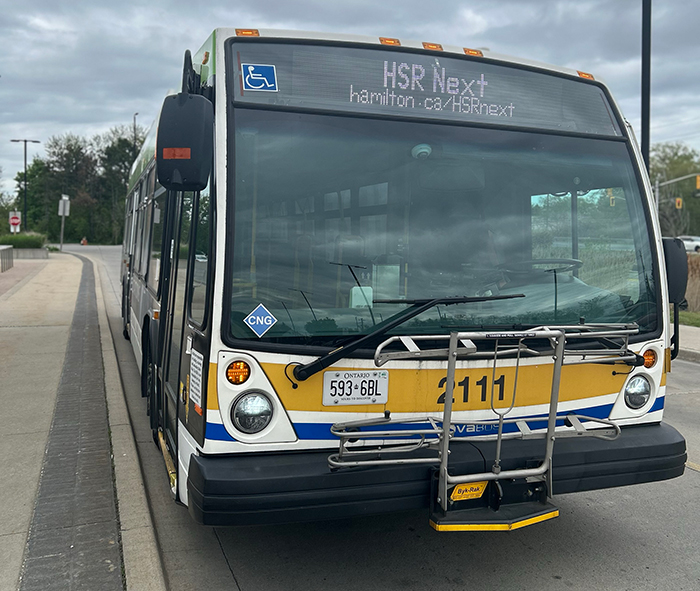
Everything about HSR Next is designed to improve your experience.
Whether you're travelling across town or just a few stops, the goal is the same: to connect you to more places with frequent service and improved connectivity.

Contact Us
For more information or questions
Email [email protected]
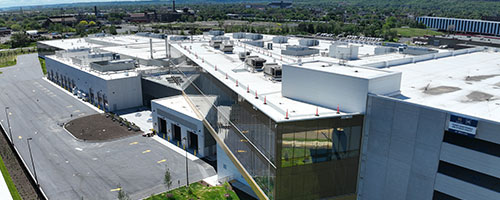
Birch Transit Centre
The new facility includes:
- storage for 200 buses, with the capacity to add additional 100 spaces
- maintenance garage
- additional administrative space & parking
Construction was completed in 2026.

Engage Hamilton
Moving Hamilton forward with HSR Next
Proposed myRide On-Demand Zone Expansion. HSR is exploring opportunities to expand myRide On-Demand transit to customers in Mount Hope and Stoney Creek.
HSR Next: Moving Hamilton Forward
HSR Next is the biggest evolution of Hamilton’s transit network in decades — delivering faster, more connected service across the city.
Building on more than 150 years of service, HSR is implementing a transit network for the present and future. This future-focused network design was shaped by your input through the (Re)envision the HSR project and marks the next step in building great transit for a growing Hamilton.
Hamilton is on the move and HSR is changing to keep pace. Today, HSR serves more than 500,000 residents across 250 square kilometres, with 35 routes, 2,300 stops, a fleet of over 300 buses and more than 900 dedicated employees. With HSR Next, we’re preparing for the future by rethinking how our transit system works — making it more connected, frequent and reliable.
This is more than just a route refresh. It’s a complete redesign that responds to community feedback and prepares Hamilton for the next generation of transit.
The final network plan, approved by the City Council in September 2025, was developed in partnership with McMaster University and shaped by more than 27,000 interactions with riders, residents and community organizations.
Starting in 2027, changes will roll out annually over several years. That means your transit network will gradually transform, giving you time to adjust and experience the benefits step by step.
What you can expect:
- Easier connections: New transit hubs across the city cut down on transfers and provide more direct trips to popular destinations for shopping, work and play.
- Better express transit access: More communities will have access to express transit, with new connections between neighbourhoods and direct links to key routes.
- New route types: Three new route types (express, collector and local) with on-demand zones that will improve HSR’s overall reliability and provide fast and frequent service.
- Seamless LRT connections: Most routes will connect directly to the LRT, with others requiring just one transfer.
- Improved regional transit access: All routes will connect to GO Train service at Hamilton GO Centre, West Harbour GO and Confederation GO Stations with no more than one transfer, facilitating new connections to neighbouring communities.
As we move through each phase of this transition, we’re here to ensure you stay informed and prepared. We’ll provide timely tools and information to support you, including:
- Annual updates with maps and details about service changes
- A frequently asked questions (FAQ) hub on this page with answers to your common questions
- Signage at bus stops, transit hubs and on buses so you’ll always know what’s coming next
- In-person pop-up events across the city where you can ask questions and learn more about upcoming changes
- Regular updates across our social media channels so you can stay connected and see what’s coming next in your neighbourhood
Public Engagement
HSR Next is designed to be rolled out over seven years starting in 2027. The specific service changes in each year are subject to change and will be finalized prior to moving into the annual engagement phase. Review the HSR Next phased engagement project.
Phase 1 Engagement- Summer 2026
Proposed Service Changes Engagement
The consultation focused on proposed service changes that would help improve local connections, support cross-city travel and move HSR toward the approved long-term HSR Next network.
New or Modified Routes
- Route 9 Rosedale: The new Route 9 Rosedale will provide service between Hamilton Stadium and the Kenilworth Access roundabout. The route has connections to the new Centre on Barton and will be extended in future years.
- Route 20 A-Line Proposed Changes: Weekday evening service will be increased, with buses arriving every 10 minutes until 8 p.m., every 15 minutes from 8 to 10 pm, and every 20 minutes after 10 pm until the end of service.
- Route 22 Upper Ottawa Proposed Changes: Service will be removed from Downtown Hamilton and shifted to Ottawa Street in the north end. Service is temporarily maintained on Unsworth Drive, Hempstead Drive, and Nebo Road north of Rymal Road, as well as Twenty Road east of Dartnall Road and Glover Road until a new route is introduced in a later year. Service levels are also adjusted.
- Route 27 Upper James Proposed Changes: Modified route will provide service between HSR’s Mountain Transit Centre and Pier 8. Major destinations, like the Hamilton General Hospital and the Amazon Fulfillment Centre are along this route. Hourly service will also be provided on a portion of Burlington Street to Birch Avenue, and along a portion of Wentworth Street North.
- Route 31 Concession: The new Route 31 Concession will provide service between Mohawk College and Mohawk Sports Park via Concession Street.
- Route 32 Fennell: The new Route 32 Fennell will provide service between the Frank A. Cooke Terminal and the new Parkdale Hub at Parkdale and Queenston, via Fennell Avenue. This route will also provide service to the Mohawk College Hub. Route 32 Fennell will be extended in later years to service McMaster University.
- Route 34 Mohawk: The proposed Route 34 Mohawk will travel between Meadowlands Hub and Eastgate Hub, via Mohawk Road and Upper Centennial Parkway, with connections to Mohawk College, St. Joseph’s Hospital-Hamilton, Lime Ridge Hub and Heritage Greene Hub. Some of the trips may continue to travel to the Confederation GO Station in Stoney Creek.
Retired Routes
- Route 12 Wentworth: HSR will provide service on the modified Route 27 Upper James. This route operates between HSR’s Mountain Transit Centre and Pier 8, with hourly service on Wentworth Street North, between Barton Street and King Street East.
- Route 21 Upper Kenilworth: HSR will provide service on two new routes, 31 Concession and 32 Fennell.
- Route 41 Mohawk: HSR will provide service on a modified Route 22 Upper Ottawa and new Route 34 Mohawk.
- Route 42 Mohawk East: HSR will provide service on two new routes, 31 Concession and 34 Mohawk
Route number changes
As a result of the new routes being introduced, two HSR route numbers will be changed:
- Route 9 Rock Gardens becomes Route 72 Rock Gardens
- Route 34 Upper Paradise becomes Route 21 Upper Paradise
myRide On-Demand Zones
Consultation focuses on feedback of preferred stop locations and key destinations within the proposed Mount Hope and Stoney Creek myRide zones.
Frequently Asked Questions
Do you have questions about upcoming changes to your transit service? We’re here to help. Find out how your route may be affected, when updates are happening and why these changes are being made.
The service expansion was delayed by one year as part of the City’s budget process approved by Council in February, 2026.
More information on the 2026 Budget can be found at www.hamilton.ca/2026Budget.
This means the route and service changes planned for the first year of HSR Next will now begin in 2027.
In the meantime, we’re still moving ahead in 2026 with important capital investments, including new buses and transit hubs.
HSR connects people to what matters most: school, work, friends and fun.
Great transit is vital to helping Hamilton achieve its vision of being the best place to raise a child and age successfully. As our population grows over the next 30 years, improving transit connections between communities will be more important than ever. A strong transit network helps reduce traffic congestion and emissions and connects to our future Light Rail Transit (LRT) system.
HSR Next will make it easier to travel across the city for work, shopping, leisure and spending time with family and friends. For many of our riders, this will reduce the time spent on transit and the number of transfers.
Changes to the network will be implemented using a phased approach over several years.
HSR Next was designed to provide practical and sustainable bus service. Some streets are suitable for buses, while others are not. Decisions about routes were guided by what works best, considering:
- Whether streets can safely and efficiently support bus traffic
- Availability of space for stops, layovers and places where the buses can turn around
- Existing and future infrastructure to support reliable service
- Logical locations for local routes to connect to major corridors and transit hubs
HSR selects bus stop locations based on how close they are to where people live and work, ensuring most residents have easy access to transit. We aim for:
- 90% of people and jobs in the urban area are within a 5-minute walk (400m) of a bus stop or on-demand transit service
- 95% are within a 10-minute walk (800m)
- All routes connect to a GO Train station with one or no transfers
These goals help ensure convenient access to transit across the city.
Yes. HSR Next builds on years of planning and public engagement to design a transit network that better reflects the needs of Hamiltonians today and into the future. Community input included more than 27,000 in-person interactions, 150 community events and 8,000 completed surveys. Engagement was a key part of shaping the proposed changes.
To learn more about the engagement process and how community feedback helped shape HSR Next, visit hamilton.ca/reenvision.
Extensive network consultation through (Re)envision the HSR included a diverse range of participants, including persons with disabilities, youth, seniors and newcomers. The survey results represented all key groups and helped shape the network design.
Moving forward, HSR Next continues to embed inclusivity, diversity, equity and accessibility as guiding principles. Communication and outreach about network changes will be tailored to our diverse audiences to support a smooth transition.
HSR Next is redesigning the bus network to better connect you to the future LRT.
Once the LRT opens, more than 90% of HSR routes will link directly, with bus service at every LRT stop. The LRT will become the main way to travel east-west through central Hamilton, while buses will continue to take you further north, south and beyond the LRT route.
HSR Next is for everyone, not just current riders. It’s designed with all Hamiltonians in mind—whether you ride the bus today or might in the future. The new network aims to make transit more convenient, fast, frequent and reliable, making it a real option for more residents.
As the new system rolls out, it will improve your access to work, school, shopping and recreation. It also helps connect people to the social, cultural and economic opportunities that make Hamilton a vibrant, inclusive city.
More and more youth are delaying or not getting a driver’s license. With the high cost of cars and insurance and the climate crisis, transit is an affordable, green and safe transportation option. Choosing transit means fewer cars on the road and a reliable way to get where you need to go.
Even if you don’t ride transit now, HSR Next supports a more connected, greener and accessible community for all.
There are so many new terms: hubs, rapid routes, collector and local routes and on-demand service. What do they all mean?
Here are a few key terms and definitions that you’ll see included on this website and throughout our customer communication. We’ll keep adding to this list as time goes on.
Hubs are key spots where lots of people start or end their trips, like Mohawk College, Meadowlands Power Centre or West Harbour. These busy areas are often called Nodes or Employment Areas in the City’s Official Plan. Some hubs will be off-street, but most will be along the road. Each hub will offer shelters, transit service information, public art and other customer amenities.
Improving first-mile/last-mile accessibility means making it easier for people to get to and from transit, whether by walking, biking, using local or on-demand transit or connecting routes, so the entire trip is more convenient and efficient.
Route and service types: HSR Next will provide service on three route types: BLASTx express routes, commuter and local routes, and myRide on-demand service.
- Express routes, called BLASTx, offer fast, direct trips between major hubs with fewer stops and frequent service.
- Collector routes connect to hubs too but cover more areas with more stops than express routes.
- Local routes bring passengers to hubs where they can transfer to collector routes and express routes.
- On-demand service does not operate a fixed route or schedule; instead, it is a stop-to-stop service that dynamically adjusts its route as customers request to be picked up within a defined service area.
Date modified